

This is a guest post by retired Colonel Jim McDonough, who enjoys a sterling reputation both at West Point and in the wider military community for his far-ranging expertise in military operational and strategic matters. Read the post below with the assurance that it comes from a man who won his spurs in both close infantry combat in Vietnam, and by later formulating and instructing in military strategy and doctrine at the highest levels. So that the reader may further evaluate the credentials that undergird his opinions, I will provide a slightly more detailed bio of Jim at the conclusion of his article, which begins immediately below.
No sooner had the levers of economic sanctions against Iran been strengthened when cries from the left and the right turned up the volume to call for our surrender.
The left’s are better orchestrated, essentially an almost frothing set of talking points that the current engagement with Tehran has been a needless and unsustainable departure from what recent Democrat administrations had already solved with skilled diplomacy. The right’s positions, as usual poorly organized, offer a mixed bag of regrets that so much has gone badly (list of horribles to follow) it is now time to throw in the towel. Both, however, stem largely from political and ideological motivation.
Oddly enough, they have a common objective. They want to get out of the conflict – and to get out fast, at any cost. In essence this would be a guarantee of strategic defeat.
Bringing war to a conclusion is always dicey. Often, great slaughter is undertaken even when it is foregone how it is going to end. Consider the final months of the Civil War, the last day of WW I (more than a thousand doughboys were killed before 11 a.m.), and the closing campaign to take Berlin (by the Soviets) in WW II. How to end a war when you have the upper hand is always a problem for national leaders. They are torn between the temptation to increase the killing or to diminish the efforts to achieve the original goals of the war. Such is the tension today for us as the Administration faces a stubborn and fanatical foe in Iran determined to fight to the end. What is the road to surrender, and who surrenders?
Insights to the answer may lie in the final days of the war against Japan. By the summer of 1945, the allies were unchallenged in the skies (save for kamikazes), the Japanese navy was at the bottom of the sea, and the Soviets were about to unleash their armies into Japanese territories. Yet Japan’s military leaders were determined to carry on, mobilizing the entire population to fight on with whatever they had at hand. They ‘bravely’ referred to it as the One Hundred Million campaign, meaning the numbers they expected would die --most of them Japanese civilians (see Evan Thomas’s excellent book, Road to Surrender: Three Men and the Countdown to the End of World War II).
The Americans had their own estimates of military casualties it would likely suffer (hundreds of thousands to millions) and spoke in terms of facing endless replicated battles on the scale of Okinawa and Iwo Jima. In lieu of that, we elected the option of the atomic bomb, the first on Hiroshima on the 6th of August and Nagasaki on the 9th. Even then, the Japanese hardliners (read military leaders) held firm, advancing their plans for a political coup should the peacemakers (referred to as ‘traitors’ by them) prove dominant. Nonetheless, despite surrender terms offered that allowed for the emperor to remain in place unharmed, the Japanese would not budge.
This impasse led the Americans to begin moving forward to drop a third bomb (then being assembled), this one on Tokyo. Our leaders were reluctant to do so (aghast at the demonstrated destructive power of the first two) but saw no other option. The Japanese did not know we had only three bombs, so they expected more were coming. This threat of more atomic bombs and the continued saturation of fire-bombings mattered to Emperor Hirohito, however, and to aother peace advocate — Foreign Minister Togo. Both knew how terrible the war had been for Japan (its people now in the early phases of starvation, the military being the only ones adequately fed) and had had enough. Their military, however, was dismissive of the reality, and divorced from any empathy for the suffering of their own people.
In the end, as the third bomb was being uploaded, Hirohito and Togo gathered their courage, denied the generals and admirals their idiocy, and signaled their readiness to surrender.
We did not know then what was going on in the Royal Palace just as we do not know now what is happening in the corridors of power in Iran. But we do know that we have great leverage over the conditions that can influence their decisions.
The first of these is our military prowess amply demonstrated in Operation Epic Fury in the spring and in the Straits of Hormuz now. The second is the economic stranglehold which has been greatly enhanced in recent days.
We also know that the Iranian people are suffering. Their economy is staggering and the rial has become virtually worthless. Everywhere (save for the political elites) deprivation is worsening.
Containing the internal unrest that might otherwise rear up has been a major concern of the fanatical IRGC leadership. So far, they have repressed it after a short but bloody uprising in the spring, but have the seeds of that rebellion gone away? Only time will tell.
We need to take that time, using the threat (and actual use) of military power when necessary and the application of severe economic sanctions to continually increase the pressure on Iran and its leaders. Now is not the time to seek an ‘exit ramp’ and surrender the goals with which we entered this conflict. Iran’s efforts to become a nuclear armed nation cannot be allowed to continue. Its endless terrorism by its regional and worldwide operatives must be dismembered.
The arguments to cease and desist using the levers we have at hand — many of them motivated by short term political objectives — are not the way ahead. Patience, strength, and calibration are what is needed. Conditions will change constantly, the power centers in Iran will bluff and deceive endlessly, and factions within our own political structures will cry out “enough” repeatedly. None of these should become a call for retreat.
Many believe the IRGC is too fanatical to fold. That was also thought to be the case with Japan’s military leadership in 1945. But when the pressure becomes so great that it is impossible for leaders to demand that their subjects ‘bear the unbearable’ any longer, those leaders start to think about their own skins.
Stay the course; apply the pressure. That is a more certain path to bring strategic positives from this trying but necessary face-off.
A note about the author from Bravo Blue
The author, Jim McDonough, has been a close personal friend for over 60 years. We were classmates and frequently roommates at West Point. Jim was — and is — a stand-out West Point, both when we were cadets from 1965 to 1969, and in subsequent years when he has been frequently invited to make presentations to cadets. As a cadet he won the Corps boxing championship two years running and in our first-class (senior) year, he was recognized and designated as the outstanding boxer at West Point. The toughness honed in the boxing ring was apparent throughout Jim’s military career, including his time leading paratroopers in infantry combat in Vietnam.
After a short initial assignment with the legendary 82d Airborne, Jim deployed to Vietnam, where he served as an infantry platoon leader with the famed 173d Airborne. After the Vietnam war the Army was downsizing and the 173d (“The Thundering Herd”) was deactivated. Later, from 1993 - 1996, Jim formed and commanded the brigade that shortly thereafter was reflagged as the prestigious 173d Airborne Infantry Brigade.
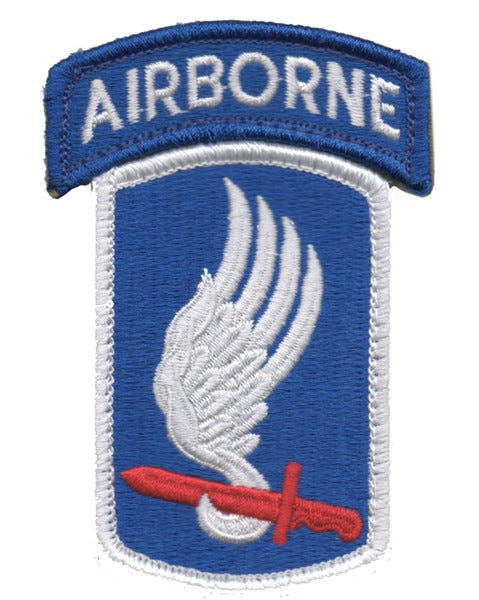
Jim also served as the Director of the Army's School of Advanced Military Studies (SAMS), which is our foremost military school for training senior officers on the execution of the operational art of war. He also served as the editor-in-chief or principal writer of several national strategic reports, such as the 1993 version of Field Manual 100-5, which set forth the Army’s central war-fighting doctrine, a 1997 Report to the Secretary of Defense on the proposed national defense strategy for the 21st Century, and a 2005 Report to the President on overseas basing requirements that were necessary to project U.S. power throughout the world.
After retiring from the military Jim served in a number of key national and state positions. One of the most trying doubtlessly was when Governor Jeb Bush asked him to assume the position of Florida’s Secretary of Corrections. Governor Bush had just been informed that the then-existing Secretary had been indicted and was going to be arrested early the next morning for a variety of federal crimes. He and a number of wardens, guards, and others were subsequently indicted and tried and sentenced to federal prison. These were people who were facing the real prospect of lengthy prison terms. They were unscrupulous and dangerous with everyting to lose, and they posed a real threat to both Jim and his family. The situation was so imminent and dire that Governor Bush could only give Jim a matter of minutes to decide if he was willing to take the position. Jim accepted, stepped in, and exhibited the courage and leadership necessary to begin to repair the system.
Jim is the author of three books. The first was Platoon Leader, a gritty memoir of his time as an infantry platoon leader with the 173d Airborne. Later he wrote two more books, a novel about Waterloo, The Limits of Glory, and The Defense of Hill 781, about modern mechanized combat that, although told as an allegory, served as a valuable tactical primer for war fighters.
And as the mortally wounded Captain Lawrence implored his crew while they were battling HMS Shannon in 1813, Jim implores our national leaders not to give up the ship despite the difficulties, but to persevere in the fight against the world’s foremost terror regime.
Well said gentlemen, well said.
On VJ Day my father was on Okinawa, at the head of a Marine Corps fighter squadron. He was already engaged in the planning of a November invasion, which could have led to a million casualties we are told. I most likely would not be here today (still) if we hadn't dropped those bombs. Do the Hard.
Excellent article. One quibble though. I think most people overlook how the A-Bombs changed the calculus. The most destructive raid of WW II was the first firebombing of Tokyo. It consisted of over 500 planes. There were 10-11 men per plane. So 5,000+ men and the fighter escorts put at risk. Not all of those planes and the men came back. Later on there were raids of over 700 planes, not over one city but 700+ planes total. per raid With the A-Bomb it was one plane, one bomb. There was an observer plane and some fighter escorts but the difference of men at risk is startling. That would have deprived the Japanese army of its "glorious final battle." Military leaders tend to be rational. Risk takers if necessary but rational. They tend not to pursue Götterdämmerung, But not always. Hence the Japanese Army at the end of WWII. Nor do rational people fly airplanes into skyscrapers. Fanatics do.